
About ReSHAPE
Lowering barriers to accessing critical data and understanding the interactions between fuel treatments and wildfires.
What is ReSHAPE?
The Southwest Ecological Restoration Institutes (SWERI) are a trusted, boundary-spanning network that bridges science, management, and policy to address complex forest and watershed challenges across the western US.
We heard the call from policymakers, land managers, and researchers for better access to fuel treatment and wildfire data. In response, SWERI launched the ReSHAPE program to:
- Compile and display national-level data on fuel treatments and wildfires.
- Coordinate and facilitate cross-boundary assessments, planning, and monitoring.
- Analyze and report on the real-world effects of fuel treatments.
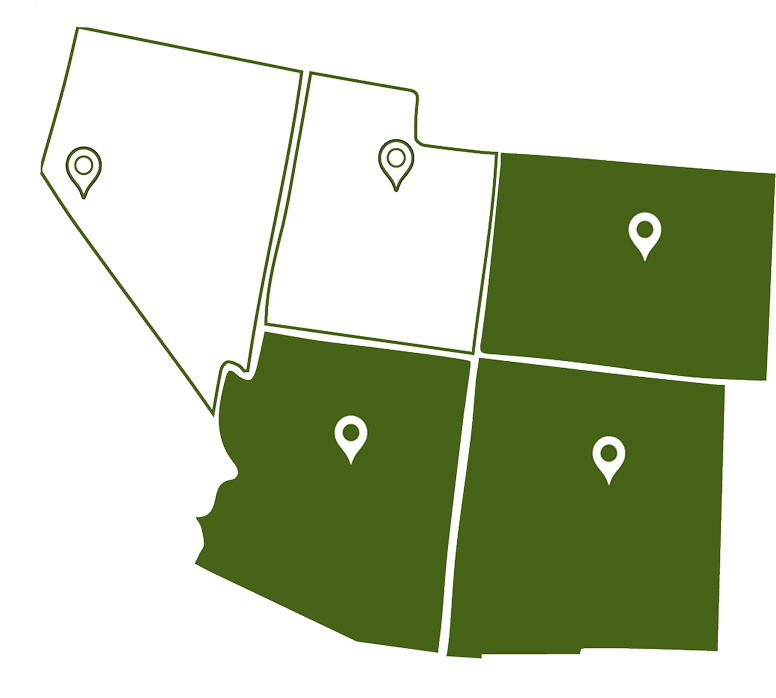
ReSHAPE SWERI Institutes Include:
ReSHAPE is a collaboration between 3 SWERI university programs, including:
- Colorado Forest Restoration Institute (CFRI) at Colorado State University
- Ecological Restoration Institute (ERI) at Northern Arizona University
- New Mexico Forest and Watershed Restoration Institute (NMFWRI) at New Mexico Highlands University


How ReSHAPE is Unique
We built ReSHAPE to fill critical gaps in fuel treatment and wildfire data. Here is what sets our initiative apart:
- A public, cross-agency treatment database. TWIG crosswalks USFS (FACTS) including hazardous fuels and projects determined to have adequate impact to influence fire, all DOI bureau (NFPORS/IFPRS), and State Agency treatment data into a single, comparable dataset.
- We did the hard crosswalk work, so you don’t have to. Only a few of hundreds of attributes were consistent between the systems of record, reconciling those systems was a significant technical and institutional undertaking. TWIG removes that barrier entirely for end users.
- Open to everyone, by design. No login. No agency affiliation required. Whether you’re a federal land manager, an NGO, a researcher, or a state forestry agency, you get the same access to the same data.
- A social science lens on data adoption. Through the CONNECT project, we’re asking the questions: How are people using treatment data and decision support tools? We’re approaching this question from a social science perspective to understand and remove the real-world barriers to data use.
- Mapping Effects. Are we doing the right work in the right places? TWIG allows researchers to explore wildfire interactions with fuels treatment
- Built for evaluation and ROI. We’re convening a broad group of federal and non-federal economists to research return on investment for wildfire fuel treatments, making the economic case for good prioritization, and making decisions visible and accessible.
Program Timeline
The ReSHAPE program follows a structured, multi-year timeline from 2022 through 2027, progressing through four key phases: initial Scoping, Action Plan development, active Implementation, and long-term Operation & Maintenance.
Turning Our Mission Into Action
By turning national data into action, SWERI works with partners to leverage data-driven knowledge to protect our communities and ensure effective forest management against the risk of catastrophic wildfires

Comprehensive, Integrated Datasets
We provide a centralized, national-scale map viewer and geodatabase that brings together siloed data together in one unified system.

Backed by Ongoing Scientific Research
Our work is driven by dedicated research programs – biophysical effects, social science (CONNECT), data science, and economics – that inform land management and help to iteratively refine TWIG to meet user needs.

Designed for Real-World Application
We deliver actionable knowledge across a wide spectrum of affected entities to inform cross-boundary forest restoration and practical wildfire mitigation strategies.
Empowering Our Users
Access to data improves decision-making before, during, and after wildfires while strengthening partner collaboration.
For Land Managers
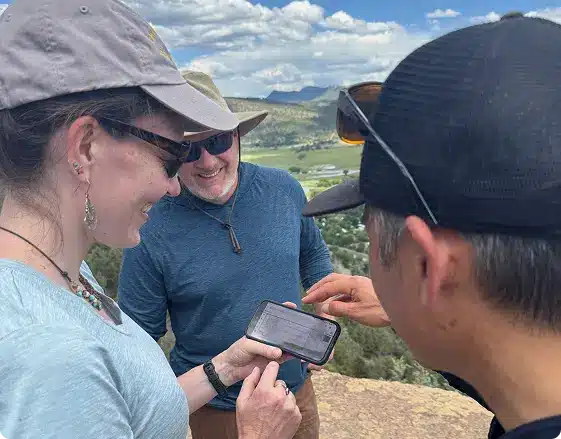
Coordinate fuel treatment planning across boundaries to foster cross-boundary collaboration and enhance landscape-scale forest resilience.
For Researchers
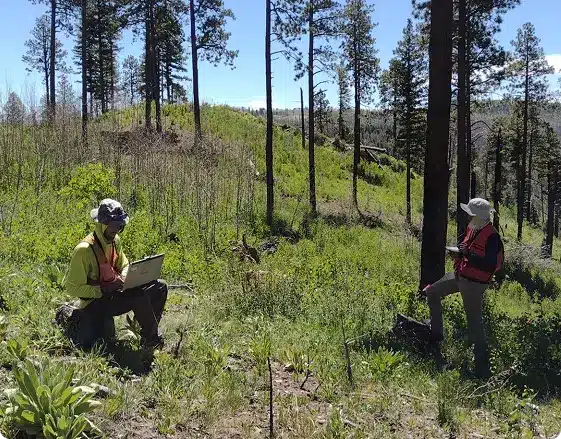
Efficiently download collated wildfire and forest treatment data into analysis software to advance wildfire science and assess treatment effectiveness
For Policymakers
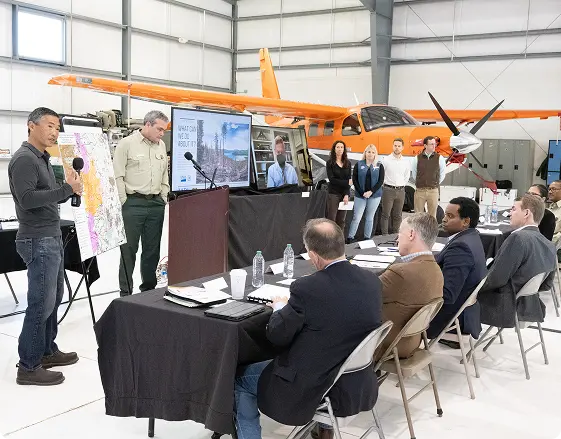
Generate summary reports on wildfires and fuel treatments to inform policy decisions, evaluate restoration investments, and support future resource allocation.
Put Data Into Action
Start exploring our accessible, nationwide geodatabase for fuel treatments and wildfires today.